World Famous Salt & Pepper Shaker Museum


See more on Instagram:
Visit the Museum
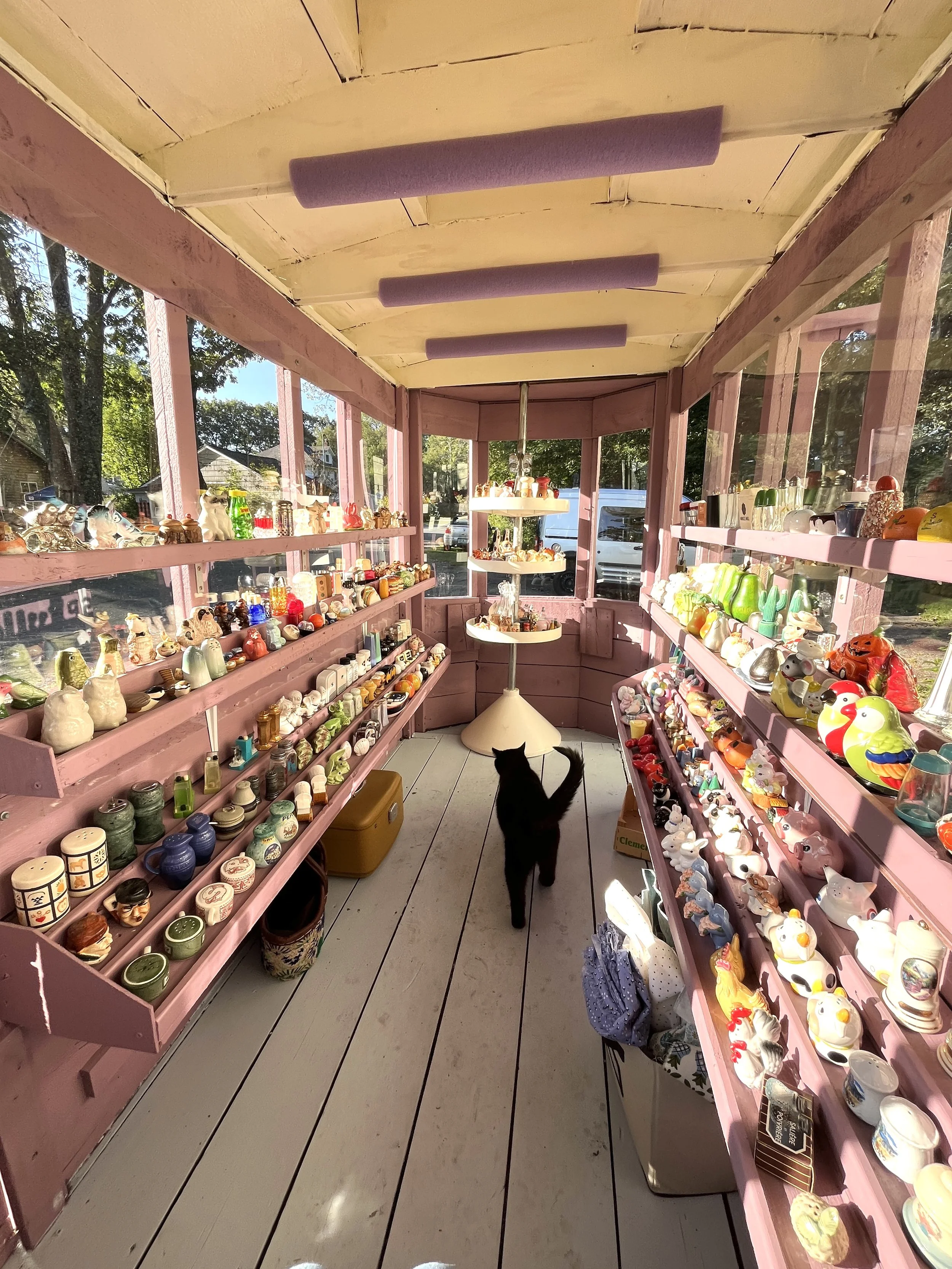
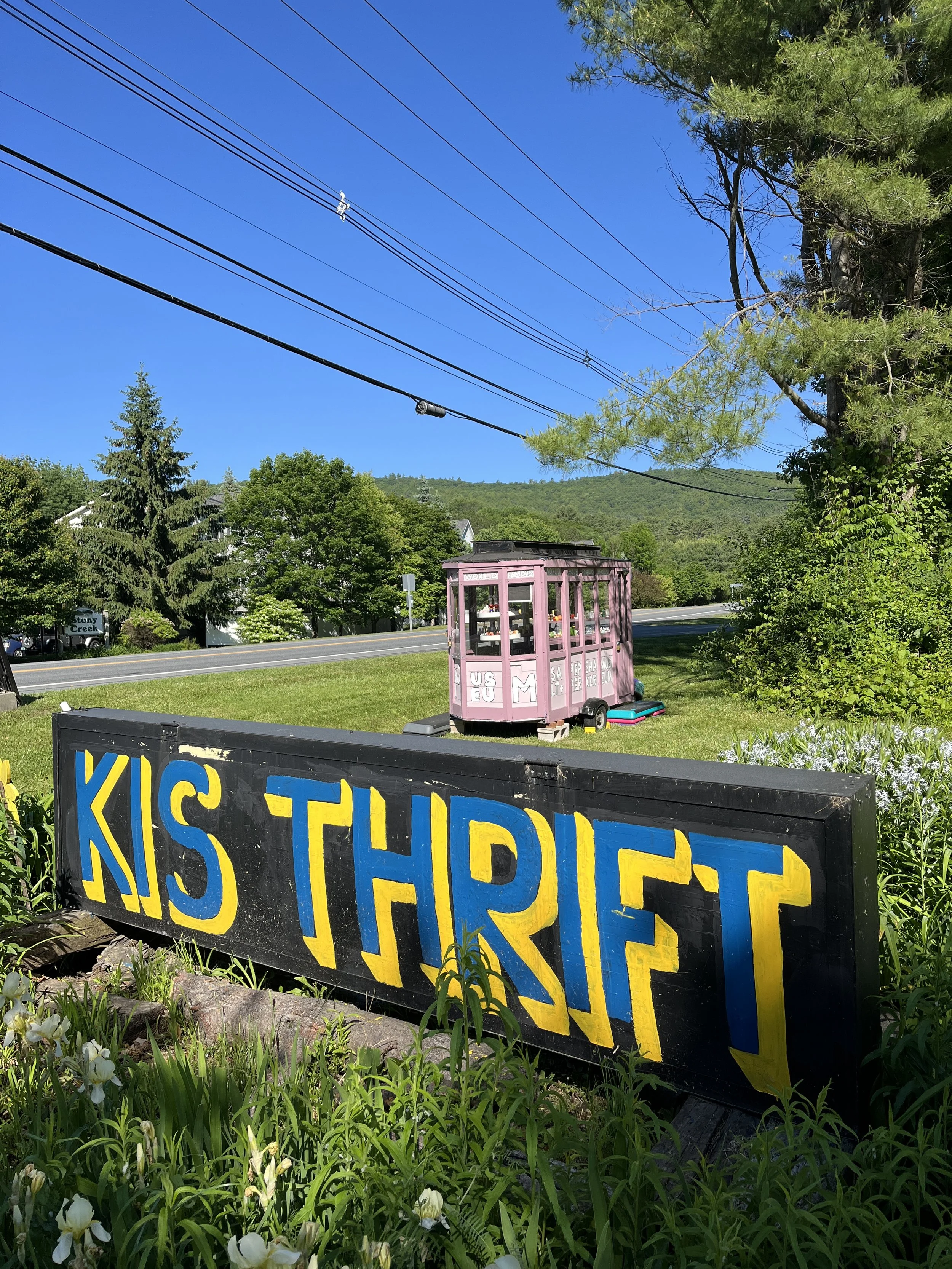
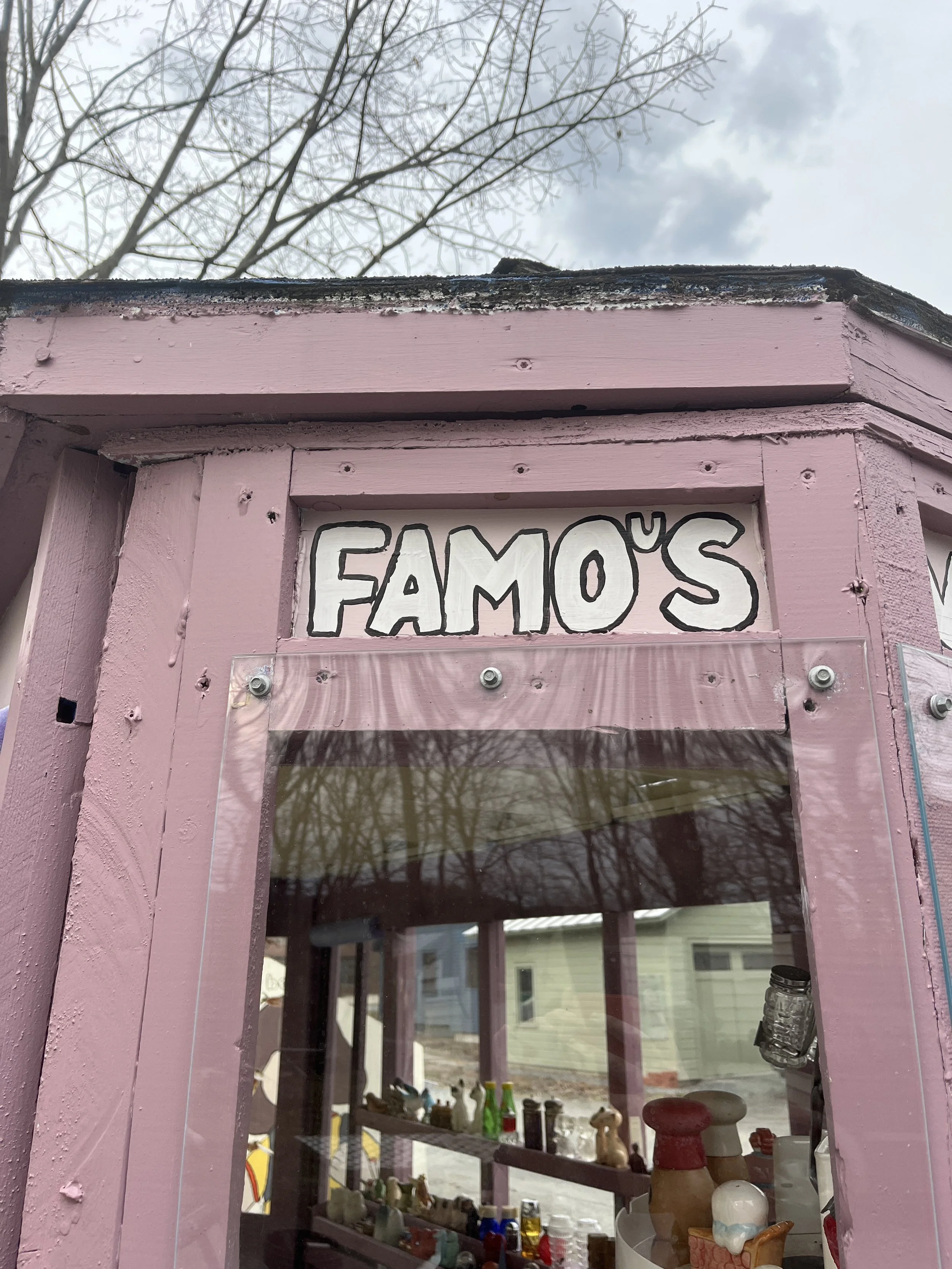
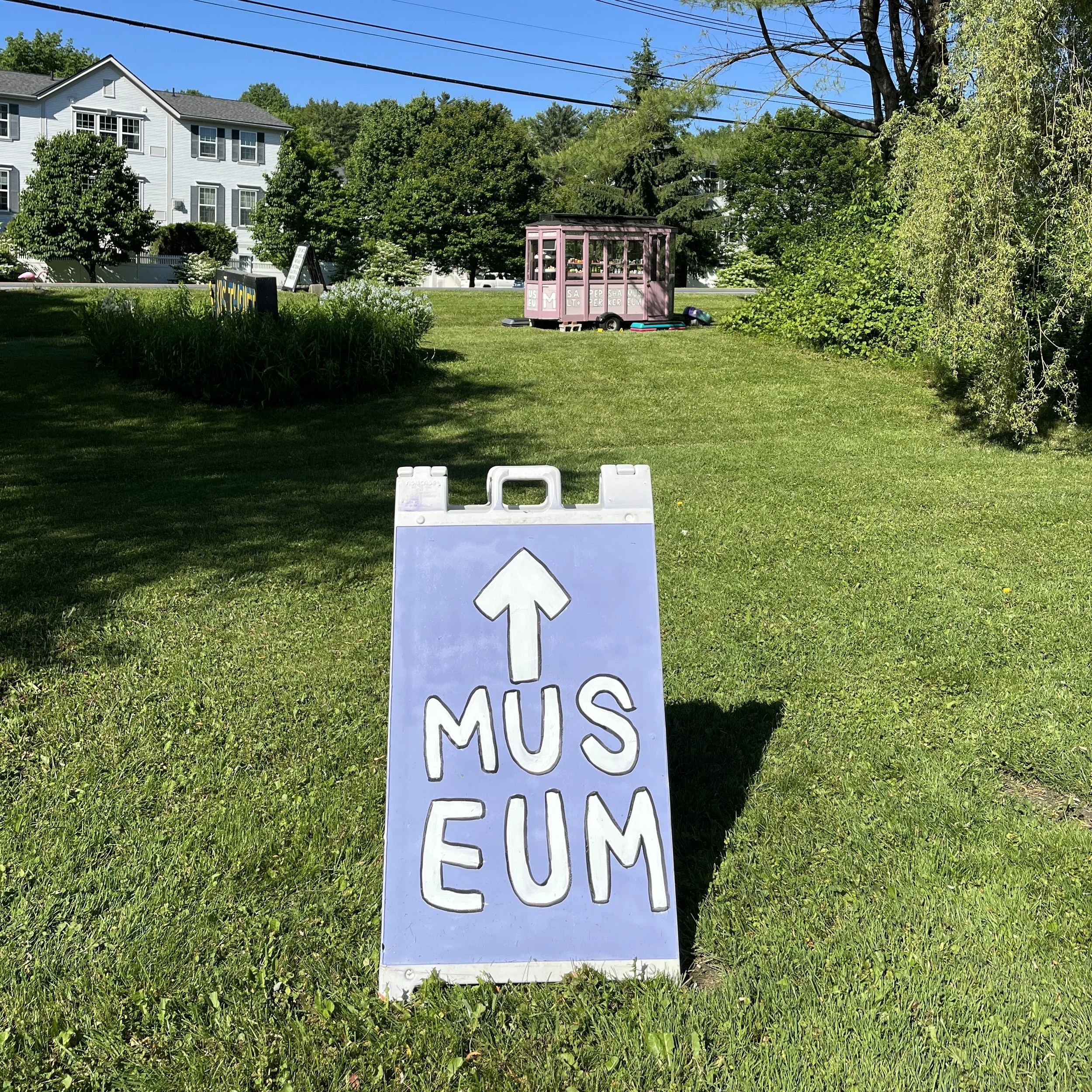
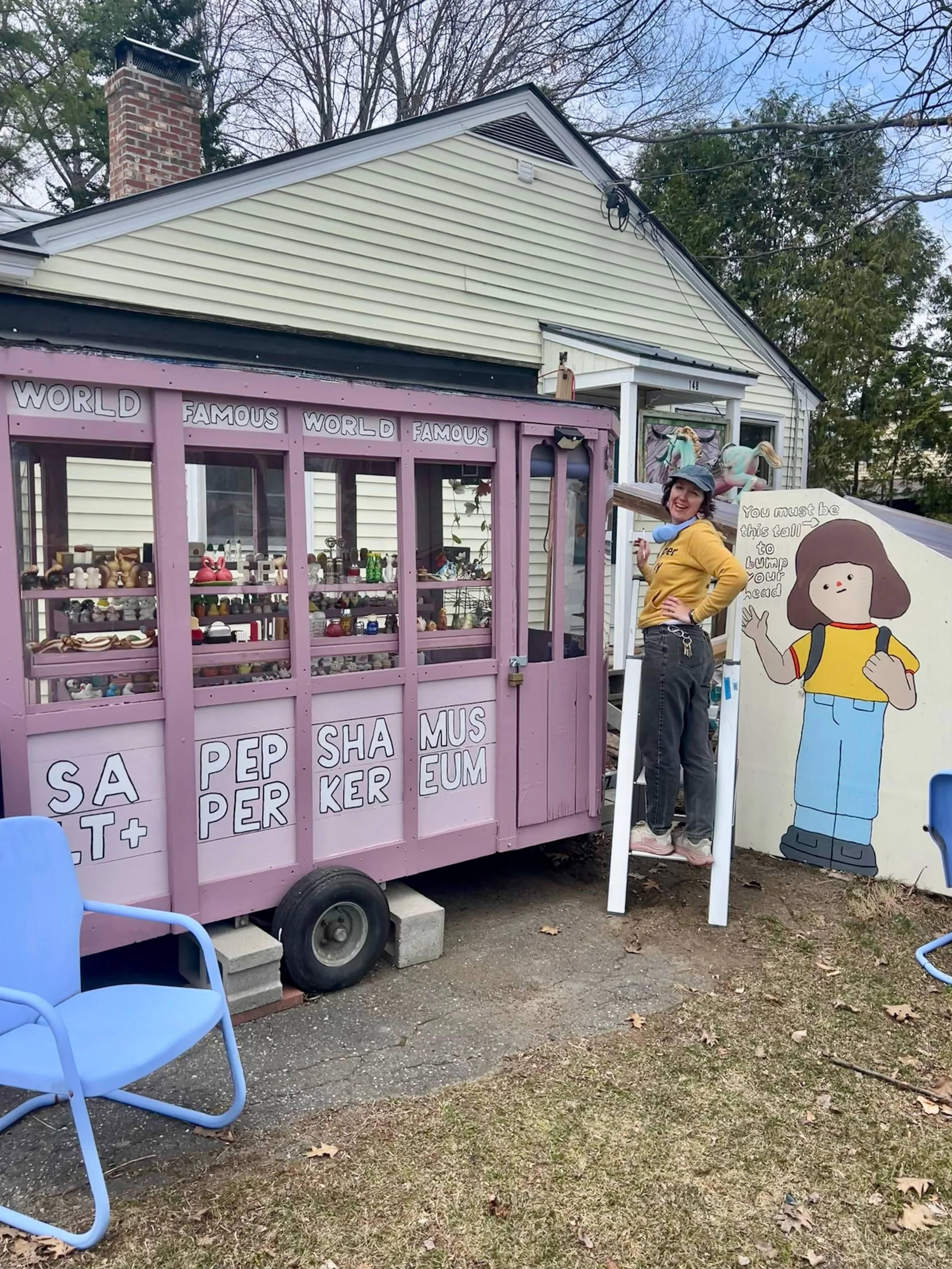
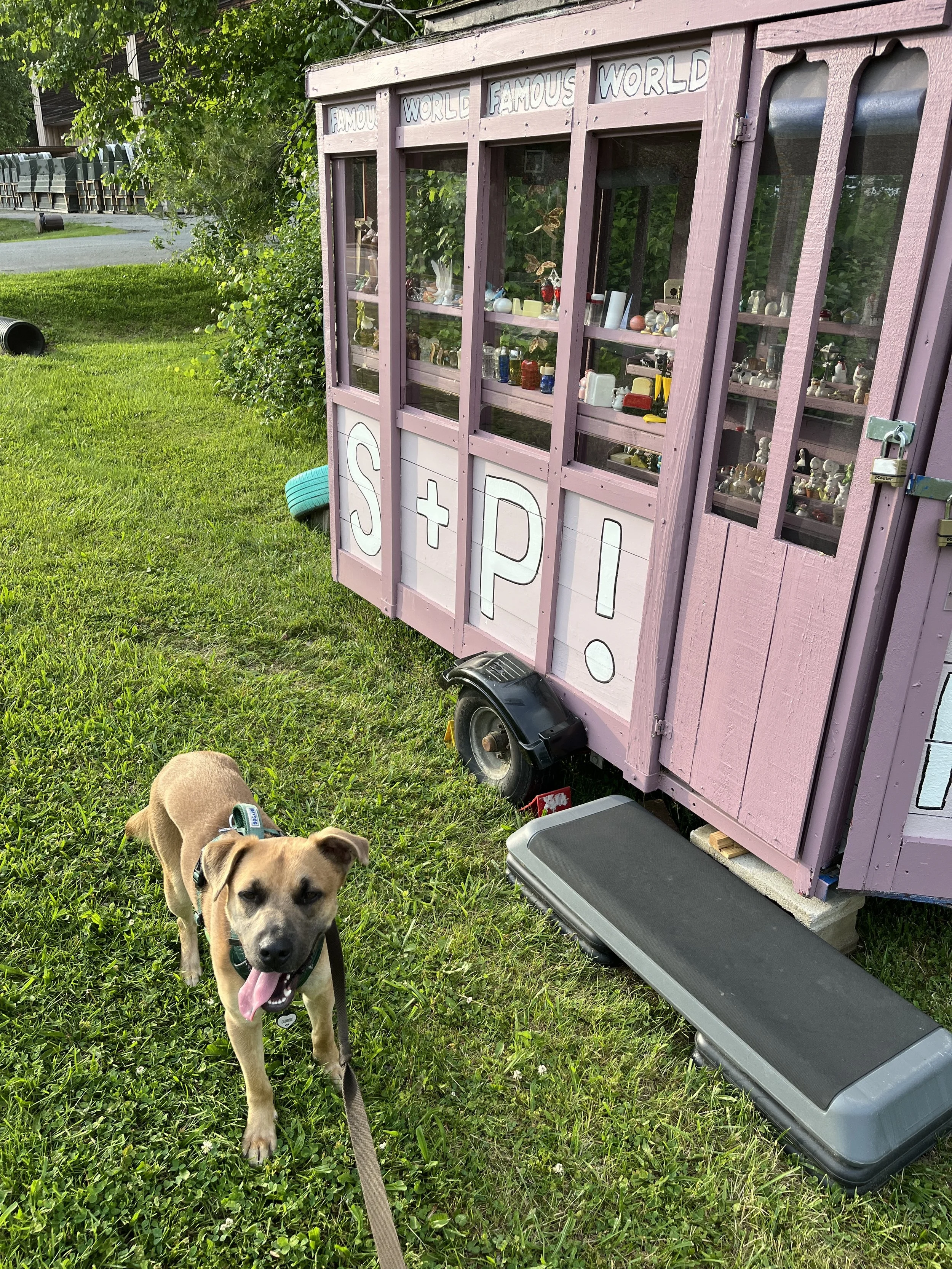
The World Famous Salt & Pepper Shaker Museum is currently located on the front lawn of KIS Thrift at 2635 Hartford Avenue in Wilder, Vermont. You’re invited to peer inside the museum seven days a week during store hours, posted at www.kisthrift.com. To reach the proprietor or schedule a tour inside the exhibit, please use the form below. Yippee!
Zombie Weed
An origin story of sorts, as originally published in Volume 5 of Vermont Almanac in 2024 before the museum’s soft launch in 2025.
As September arrives, I’m planning my next stage of attack. So, let me tell you the story of this unhinged yearslong war against a small patch of invasive knotweed (and my vision to build a salt-and-pepper shaker museum in a trolley on its deathbed) and how one specialist told me I should probably just chill out.
I first spotted the plant after my husband and I bought our home in a residential White River Junction neighborhood eight years ago. Resembling bamboo with emerald pointed oval leaves, Fallopia japonica – known as Japanese knotweed – produces small white flowers that one magazine described as “pretty.” Once you see it, you can’t stop, due to its omnipresence along Vermont’s riverbanks and roadways.
Perhaps it’s not quite that widespread, but close. “In Vermont,” according to the state’s Fish & Wildlife Department, “knotweed covers miles of shoreline on every major river in the state.” It’s a member of the state’s Noxious Weed Quarantine list, which basically means it’s an unwelcome bully. Knotweed chokes out native plants, especially in wet or disturbed soil, hurting bugs that eat the natives, which in turn hurts wildlife who eat the bugs.
Another concern is riverbank stability, surely heightened in this flood-ravaged era. “Rivers and streams also face an increased erosion risk from uncontrolled knotweed populations,” the wildlife department says. “The ground beneath dense growths of knotweed rarely supports other vegetation leaving the bare soil very susceptible to erosion.”
My initial concern was considerably less consequential. The knotweed was blocking my view. During my morning coffee, I like to gaze past the plot at the end of our yard, admiring my neighbors’ gardens or the occasional dog out for its morning walk, owner in tow. The bamboo-ey stuff – which I didn’t know much about – was interrupting. We mowed the patch the size of a camper van once or twice in the first few years, sometimes annoyed but with a firm grip on proportionality.
Yet when the patch returned year after year, and seemed in fact to expand, I did what every homeowner does: a Google search. And that’s when I freaked.
Remember the magazine that called the knotweed’s flowers “pretty”? That was Southern Living in a 2021 article under the headline, “Why Japanese Knotweed Instills Terror in The Heart of Any Gardener.” My search yielded a parade of similarly scary titles, followed by descriptions of the “extremely tenacious” plant and its “zombie-like refusal to die.”
I was disturbed by claims of knotweed’s power to disrupt not only gardens and walkways, but driveways and building foundations. I skipped the parts that threw those findings into doubt, as I was frenzied to read that lenders in the U.K. consider the plant so problematic that its presence might impact a homebuyer’s ability to get a loan. Yowza!
Every website seemed to offer different advice, but most conveyed an uphill battle I was likely to lose. Some said the danger was overhyped and suggested mowing would work – as long as we were consistent year after year, which we hadn’t been. Others said mowing could spread it. Several said I should eat the stuff (“tastes like rhubarb”).
I was uninterested in pie or graduality. Instead, I tried every suggestion at once: cutting the stalks and pouring poison down their throats; shoveling out the rhizomes, which my research led me to believe were magical sources of resurrective powers; staking huge swaths of quarter-inch wire, meant to sap energy from weeds that tried to poke through; and covering the whole mess with heavy-duty tarps, denying it sunlight. I tiptoed barefooted through the yard to wash my shoes, shears, and shovels, convinced that a micron of misplaced rhizome would sprout a new patch.
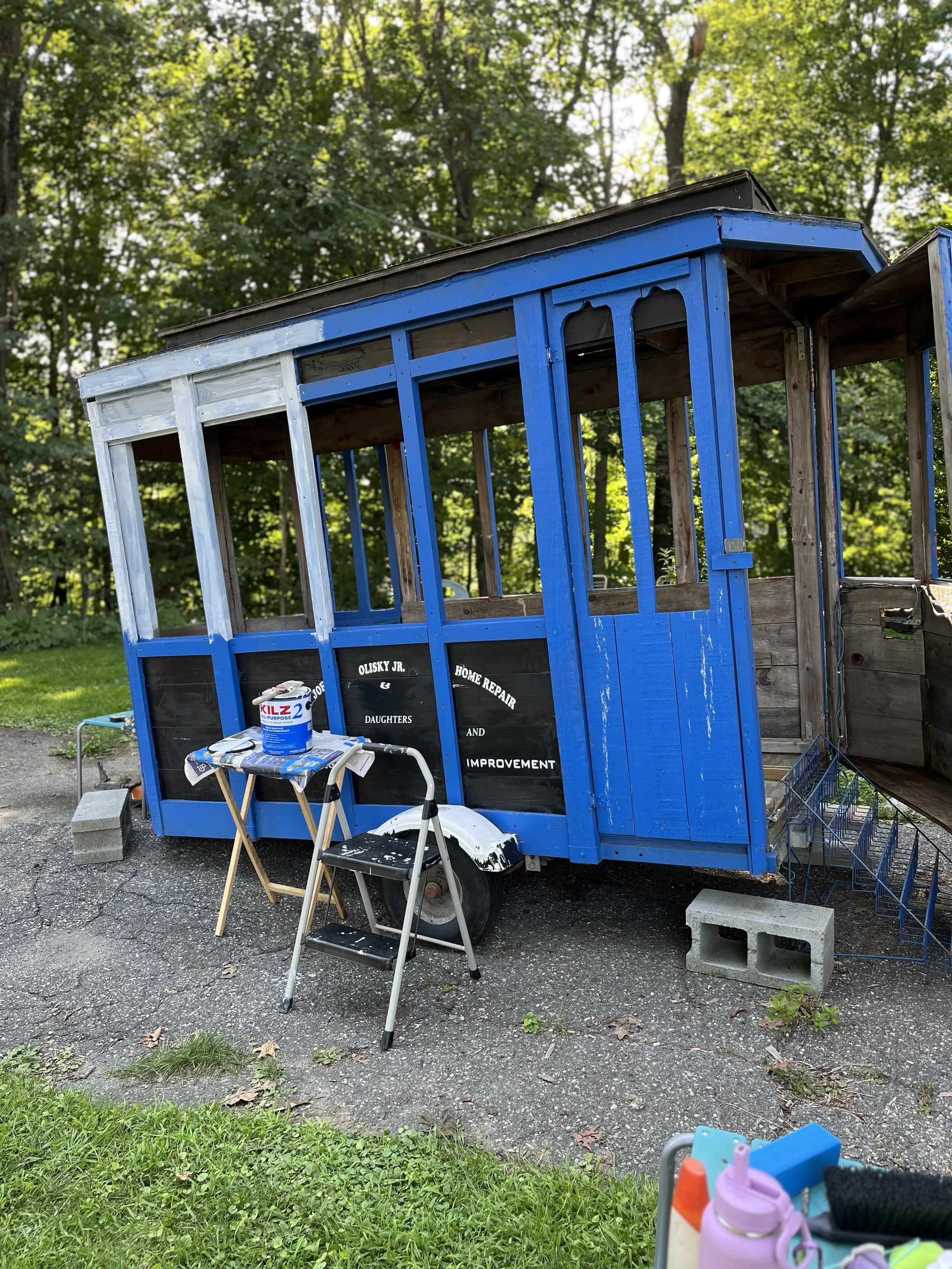
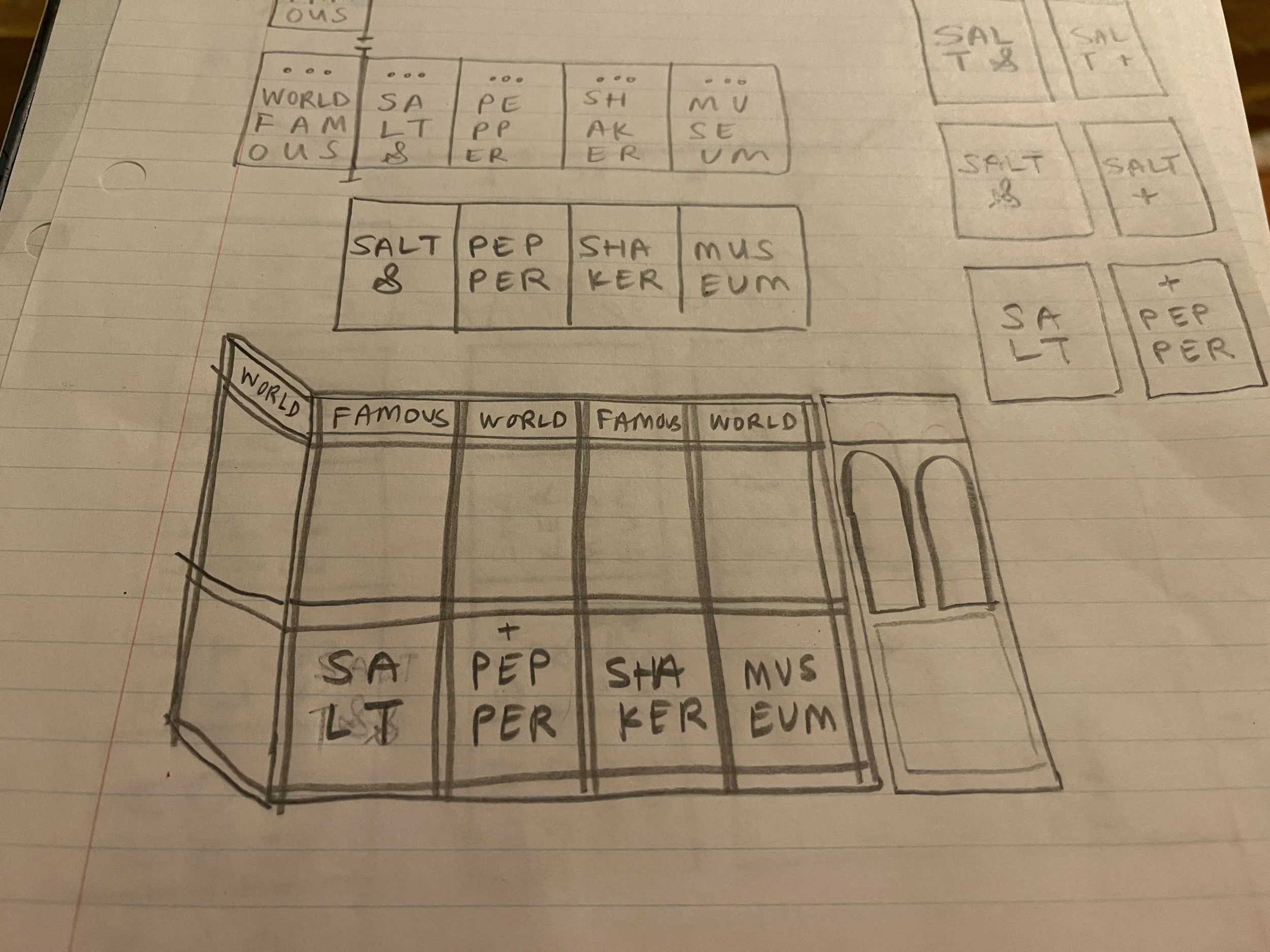
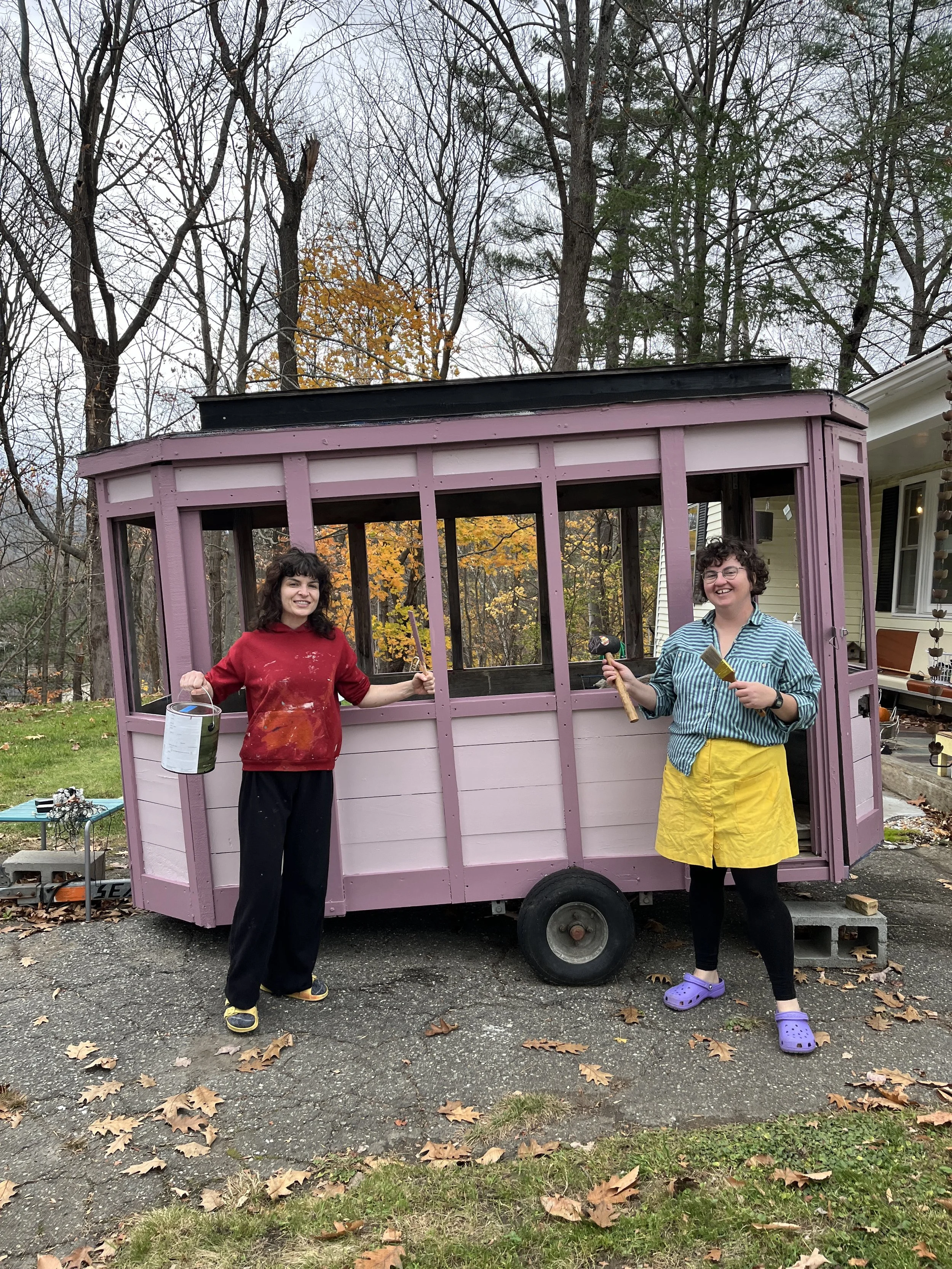
The tarps, of course, were ugly. In a strange attempt at beautification, I topped them with green astroturf and a bright blue wooden trolley built on a trailer, which I bought off Facebook from a guy who lives in a homemade castle in rural New Hampshire. I imagined the trolley could one day house my concerningly increasing salt-and-pepper-shaker collection (perhaps this gives you a sense of my propensity for obsessive behavior), but also the trolley drew the eye upward. The morning dogs were intrigued, but I’m sure their owners thought I’d lost the thread.
Who cares! I thought. Surely this could work.
Not even close. If anything, I seemed to provoke the plot’s expansion, as new stalks sprouted beyond the tarps. Some poked through the center, undeterred by the wire mesh. When I peeked underneath a few springs later, I understood the “zombie” reference, finding a squiggly mass that resembled huge albino worms. I lobbed a few more cutting attacks, but they were futile. The trolley sat unused, weeds gathering around it.
Devastated, last year I tracked down a couple of New England knotweed removal experts. One, who does battle for the likes of land trusts and governments, was surprised to learn I was calling about eight by ten yards instead of acres. He had a lot of practical advice, but after he listened to my saga, his central question startled me. In essence, he asked: Have you considered giving it a rest?
The patch is far from any waterbodies or buildings. Maybe, he suggested, I could learn to manage it instead of demanding to destroy it. Maybe we could even coexist. I’ve lost my notes from that phone call, but I know his suggestions included the word “Zen.”
Interesting proposition, I thought, the twitch fading from my eye. And indeed, I ratcheted down the knotweed war, ignoring the plot for most of last summer. My husband recently helped me move the trolley in preparation to paint it, the first step in its museum rebirth.
But I also painted poison on the knotweed leaves last September, and I think I’ll do that again this month. When it comes to zombies, I figure Zen will only get you so far.